In the mid 1970s, future Spin Magazine editor Legs McNeil was just a burnout kid from the outer boroughs of New York City who -- with friends John Holmstrom and Ged Dunn -- put together a fanzine so they could hang out with their favorite band, The Dictators.
The fanzine was called Punk Magazine. It became a cultural touchstone and (if McNeil himself is to be believed) gave a name to an underground culture and music movement that was just starting to bubble up as a reaction against hippies, disco, and the growth of stadium rock.
More than 20 years later, McNeil put together this book, which is a collection of interviews with everyone from Lou Reed (The Velvet Underground), Iggy Pop (The Stooges), Wayne Kramer (the MC5), Patti Smith, and about a million others, going back to the early 1960s and narrating the chaotic rise of a movement that -- like all movements -- wasn't really a movement at all. These kids had no idea what they were doing or where any of this would lead. For them it was all about sex, drugs, puking, sleeping in gutters, hustling at Times Square, taking more drugs, talking shit about each other, getting stabbed by their girlfriends, puking some more, and occasionally playing some music.
McNeil doesn't contextualize very much, and he doesn't try to make this book comprehensive. He just lets the people involved speak for themselves. This is about how punk rock was born, and -- with the exception of a few epilogues toward the end telling us where some of these characters would end up (most of them not well) -- the narrative pretty much stops at the 1980s. We don't hear anything about Southern California hardcore, post-punk, emo, or any of the offshoots that sprung out of the original scene. The Dead Kennedys aren't even mentioned, much less Green Day.
But, like McNeil's subsequent oral history The Other Hollywood: The Uncensored Oral History of the Porn Film Industry, Please Kill Me provides a fascinating and unvarnished look at the details that made up the movement, such as it was. McNeil and McCain wisely narrow their focus to a few pertinent characters: primarily Pop, Kramer, Smith, Dee Dee Ramone, and Johnny Thunders from the New York Dolls. But they include snippets of interviews from literally hundreds of people (I really appreciated the appendix at the end listing all the participants), and in so doing manags to create an almost anthropological study in how a subculture like this comes to be. It's fascinating to see how disparate the influences were -- hot rod racing in Detroit, Warhol's Factory, the gay underground in New York City, just to name a few -- and how, over the course of years, it all coalesced into something that was, while not entirely cohesive, certainly a musical and cultural a paradigm shift.
And we get great stories on such topics as the birth of CBGBs, Malcolm McLaren's disastrous stint as the Dolls' manager, Handsome Dick Manitoba's feud with Wayne County, the squalid and doomed romance between Nancy Spungen and Syd Vicious, and much more.
And, yes, there's lots of sex, drugs, blood and vomit.
Partly inspired by Dusty's excellent and always entertaining Playground of Doom blog -- as well as my own realization that I just don't care as much about talking about movies as I did when I started this thing a year ago -- I've decided to retool "Blood Has Been Shed Jerry" into a general all-purpose review and pop-culture blog.
The fact is these days I've been reading books and listening to music -- and following the trials and tribulations of one Ms. Lindsay Lohan and one Mr. Mel Gibson -- way more than I've been watching movies.
So, in that spirit, here's my first music blog.
Every one of us has four or five albums that affected us so thoroughly when we first encountered them that they've become infused into our DNA. These albums may be undisputed masterpieces. There are plenty of people of my parents' generation who would point to The Beatles "Sergeant Pepper's Lonely Hearts Club Band" or Dylan's "Blood on the Tracks" as the records that define that era for them, and no one would argue.
But sometimes these are just records that found us at the right time and, regardless of quality or critical consensus, managed to find some soft spot in our souls to poke at. Maybe they got us through a breakup, or helped us get our sea legs at a new job, or defined one wild and crazy summer. We could be talking about (in the case of one ex-girlfriend of mine) Abba's "Greatest Hits." Or Metallica's "Master of Puppets." Or maybe the soundtrack from West Side Story. Doesn't matter. We cling to these records like they're a ratty old stuffed animal or a poop-stained security blanket, and it doesn't matter to us that Rolling Stone only gave them two stars.
This list is probably a combination of both masterpieces and security blankets. I'll let you decide which are which.
Here are the Five Albums That Changed My Life, ranked chronologically by when I discovered them.
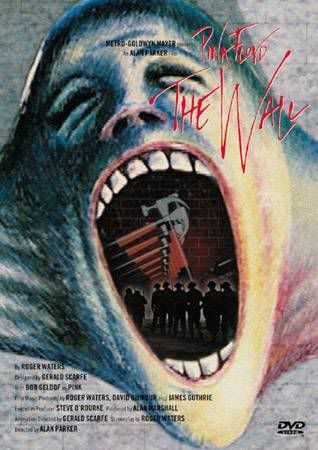
1. Pink Floyd - "The Wall" (1979)
This is it, the big daddy, the one that looms above all others for me. Nothing has ever come close.
First, a bit of context. This has been my favorite album for over 25 years. That's only impressive when you realize that I'm 32 and you do the math.
That's right: I was rocking out to "Comfortably Numb" and running around jumping on the couch and screaming "WE DON'T NEED NO EDUCATION" when I was six. That's what happens when your brother is 12 years older than you.
I got my first Walkman cassete player when my parents and I road-tripped the country one summer around when I was in the first grade, and the first three tapes I had were Creedence Clearwater Revival's "Green River" (just missed this list by a nose), some greatest hits collection by Chuck Berry ... and "The Wall." These tapes were my introduction to the very concept of rock and roll. The first two were purchased at the same Walgreens or whatever where my dad got me the Walkman (presumably to shut me up in the back of the car).
The third came from my brother some time after we got back, recorded off his scratchy double LP and wrapped up as (I think) a Christmas present.
To this day, I can't really say what it is about this record that shook me so thoroughly. I've explored Floyd's catalogue backward and forward in the years since, and I can very articulately (and pretentiously) deconstruct "Dark Side of the Moon" for you, go on and on about its varied sonic landscape and its obsessions with mortality and insanity. I can tear into "Wish You Were Here" and blather about how it's a mournful meditation on fame and (yep) insanity. I can talk about poor lost Syd Barret and the shadow his acid-fueled meltdown cast over the rest of the band. I can talk about Roger Waters and his daddy issues. I can tell you exactly why I think David Gilmour is a better guitarist than Clapton.
I could also bore the piss out of you by going through this record song-by-song and telling you everything I think you need to know about it. Did you know "The Trial" wasn't Roger Waters' idea, but rather a last-minute suggestion by producer Bob Ezrin? Oh, you don't care? Sorry. I'll stop here. Just listen to it, and then try to tell me that when Roger Waters shrieks about worms eating his brain in "Hey You" or when Gilmour tells you (in the voice of the psychotic Pink) to wish "our colored cousins" a safe trip back to Africa in "Waiting for the Worms" that the hair on the back of your neck doesn't stand up.
I love many, many Pink Floyd albums ... but it still all boils down to "The Wall" for me. This is probably in no small part simply because it was the first, and a gift from my brother, who when I was six was infinitely more badass than anyone else I knew. But he also gave me The Scorpions "Blackout" and Dire Straits' "Money For Nothing," and I'm not going to sit here and tout those as a life changers. "The Wall" has stuck with me through the years and through all my different phases (the jazz phase in the eighth grade, the death-metal phase in college, the alt country phase from two or three years ago). It won't let me go.
The emotional core to the album is distilled in Roger Waters' scream that immediately preceeds the "we don't need no education" refrain from "Another Brick in the Wall (Part II). There's something about it that just cuts into me like a blade.
For a band so often dismissed as space rock, there's an open-wound, primal howl quality to "The Wall" that was (and is) unlike anything I'd ever encountered before. It's both deeply personal and acidly political. It's theatrical as well as introspective. It's about rage. And pain. And, yes, insanity. It's not Elvis being a hound dog, The Beatles wanting to hold your hand, or Bill Haley rocking around the clock. It's not even the Sex Pistols sneering about the Queen.
Forgot the smelly stoners and the laser shows at the casinos. This is rock and roll reconstituted as a bloodletting.
I love it. Twenty five years later and I still can't get enough.
Bob Hoskins rules
2. Jim Croce - "Photographs & Memories: His Greatest Hits" (199-?)
I imagine all of you out there, eyes wide and shaking your head and going "WHAAA?" But before you judge, listen to this:
Now tell me that isn't the prettiest goddamn thing you've ever heard. And if a lump doesn't rise in your throat when Jim tells the operator that "you can keep the dime," I'm sorry to tell you that your heart is nothing but a shriveled prune hanging limp and useless in the dank black cave of your chest.
Still not convinced? Try this one:
If that didn't bring a tear to your eye than there's nothing I can do for you. Go torture a puppy or whatever else it is you do for fun.
Croce was one of those sort-of folkie early 70s singer-songwriters like Harry Nilsson, Cat Stevens and Harry Chapin. He was born in South Philly, rocked possibly the world's single greatest mustache and had himself a pretty solid little career there for a few years. And then he died in a plane crash in 1973.
There wasn't much that set him apart from the singer-songwriter pack beyond the fact that he was just better than the rest of them. Most of you, if you've heard of him at all, probably know the humorous uptempo slices of urban life like "Bad Bad Leroy Brown" and "You Don't Mess Around With Jim." Good stuff, sure. But for me he really only came to life with his heartbreak ballads. He was an excellent singer with a warm, lived-in voice and an instinctual sense of melody that could pluck emotion from your heart with the precision of a surgeon's fingers.
This stuff borders on schmaltz, to be sure. But there was something so genuine, so unironic, about him that, whenever I hear a song like "Operator" or "Lover's Cross," I simply believe him in a way that I don't with almost any other singer-songwriter from the era.
As far as the album itself goes, it was just one of those cheapo compilations that my dad bought one day at Price Club back when I was in middle school. He played it when we got home, and I fell in love with it and pretty much stole it from him after the first listen (this was the era of Nirvana and New Kids on the Block. The fact that THIS was my favorite CD for about three years should tell you everything you need to know about my social standing in those days).
I even remember the track list:
1. Bad Bad Leroy Brown 2. Operator (That's Not The Way It Feels) 3. Photographs & Memories 4. Rapid Roy (The Stock Car Boy) 5. Time In A Bottle 6. New York's Not My Home 7. Workin' At The Car Wash Blues 8. I Got A Name 9. I'll Have To Say I Love You In A Song 10. Lover's Cross 11. One Less Set Of Footsteps 12. These Dreams 13. Roller Derby Queen
Eventually I made it to college, got a lip piercing and dyed my hair black and started listening to extreme European death metal. I went to about a million shows by bands like Cephalic Carnage, Broken Hope, Wicked Innocence, and Macabre. I got punched in the throat, punched another guy in the throat, had a fat guy fall on my knee and bend it backwards, watched a dwarf throw a metal folding chair across the mosh pit and knock a guy out. I was (excuse me while I puff myself up for a moment) a hardcore motherfucker.
Yep
But late at night, by myself, I would lay in my dorm and put my headphones on and go to sleep to Jim Croce.
Sometimes I still do.
If you don't like this you're probably a Stalinist
3. Korn - "Korn" (1994)
Back in 1995 I was in Rare Bear Records in Santa Fe picking through the used CDs when I came across the album you see above.
This was well before "A.D.I.D.A.S.," "Freak on a Leash," the lame-ass duets with Fred Durst and The Pharcyde, the "nü metal" label, the hip-hop pretensions and posturing, the Family Values stadium tours, and the constant MTV/TRL rotation. Korn had not yet become the cartoon godfathers of one of the lamest movements in popular music that we've ever had the misfortune to suffer through. They had yet to give birth to (shudder) Staind, (shiver) Papa Roach, and (vomit) Crazy Town. They were next to unknown. There were no band photos that I recall in the album booklet. Radio and MTV was having nothing to do with them (I later heard rumors that the "Blind" video showed up on Headbangers Ball a few times, but I never saw it).
I so wanted to look like Munky when I was 17
The CD was priced $5.99 and I thought that creepy-ass photo was pretty cool, so I bought it. I didn't get to listen to it until I got home (CD players in cars were still a novelty back then), and by the time I'd made the drive I forgot all about it. Then, a week or so later while cleaning off my desk after school, I found it in the pile and threw it into my CD player, not really expecting much.
It's hard for me to admit, knowing what we all know now about where this would ultimately lead ("I did it all for the NOOKIE, the NOOKIE..." seriously, Fred, fuck you), how powerful that first spin was. When coming up with this list I knew I needed to pick at least one metal album and I was really tempted to go with Faith No More's "Angel Dust," which was my favorite CD from a much better band. But if I'm to be truthful, nothing I stumbled across in high school came close to this album's ability to inflict pure blunt-force emotional trauma.
I remember sitting there on the edge of my bed with my eyes wide and my jaw hanging open as Jonathan Davis shredded his vocal chords and tore his heart out and (metaphorically ... I think) cut his wrists open and bled pus all over my virgin eardrums. It was like listening to the musical equivalent of bowel cancer ... and I mean that in the best possible way. Remember, this was still the grunge era, Green Day was just hitting the big time, Kurt Cobain had just eaten his shotgun, and Eddie Vedder and Trent Reznor were the closest we came to having bonafide tortured artists to look up to. So "Korn" was a total revelation. I didn't realize music could be so ferocious, so ugly, and yet so nakedly vulnerable at the same time.
When, on the bullied-kid memoir "Faget", Davis screams "I'm a FAGGOT/I'm a FAGGOT/I'm NOT a FAGGOT/You motherfucking QUEERS", my head spun around like Linda Blair's in The Exorcist.
Jeez
This wasn't macho, homophobic posturing and it wasn't pouty, Cure-style moping. This wan't Trent suffering beautifully in Sharon Tate's Hollywood Hills mansion. This was a guy in real pain, possessed by an all-consuming rage that seemed to bubble up like magma from the furnace of his soul. His voice was a howl from the abyss. He sounded like a dog being fed through a wood chipper.
And -- like millions of high school kids discovering The Who or The Stooges or Black Sabbath or Hüsker Dü or Nine Inch Nails or (these days probably) Fall Out Boy and My Chemical Romance for the first time -- I was overwhelmed by the feeling that "this guy gets me."
Keep in mind that I was really just a sort of tubby, somewhat socially awkward kid with a mullet and a good family. The perspective of years has made me see that, even if he got me, I certainly didn't get him. I had no idea what pain really was ... certainly not the kind of pain he was screaming about. But there was a rawness and a truthfulness to the record that rattled me way down in my bones. When you're 17 and looking for someone to put a form to whatever weird tornado you have going on inside you, that shit matters.
"Korn" introduced me to the possibilities of what heavy music could do. It didn't have to be a bunch of posing tough-guy bullshit. It could be an open wound. I imagine that what I felt the first time I listened to the CD was a little bit of what Johnny Ramone must have felt when he discovered The Stooges' "Raw Power."
I'm in my thirties now, and I still listen to this album occasionally, once every two or three years maybe. It's hard to plug back into what it meant to me when I was that pissed-off misfit kid. I can still enjoy it, sort of, in a pure nostalgia sort of way. But Korn lost me with their follow-up, "Life Is Peachy," which felt like a pale attempt to recreate the first album, and by the time they got to the sad joke that was "Follow the Leader" I was pretty much over them.
But I remember that first spin. The moment was fleeting, sure. But it was real.
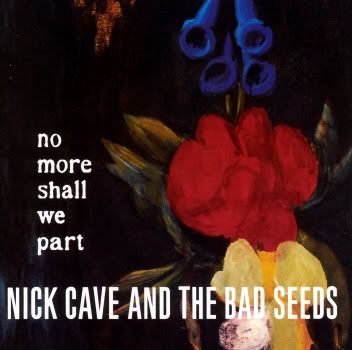
4. Nick Cave & The Bad Seeds - "No More Shall We Part" (2001)
My first encounter with Nick Cave was Metallica's cover of "Loverman" on the "Garage Inc." album. I loved it, so I ran out and bought the Bad Seeds' "Let Love In" (1994) and "Murder Ballads" (1996). And I found myself a new hero.
These two albums are pretty spectacular. They're melodic but harsh, rooted in both blues and punk rock, and Cave displays a singularly dark lyrical sensibility that I -- coming off of my years as a death metal fan -- plugged into right away.
These albums, to me, were more punk than punk, more death rock than Cannibal Corpse could ever be. They reconstituted the whole idea of goth and made The Cure and Joy Division completely irrelevant.
So at first I wasn't entirely sure what to make of "No More Shall We Part." Gone, it seems, was the snarling provocateur who delivered such classic lyrics as "I'm a bad motherfucker don't you know/ But I'll crawl over fifty good pussies to get to one fat boy's asshole" (from "Stagger Lee" off of "Murder Ballads").
Heh
Nope. That Nick Cave seemed to have departed. Now he was crooning stuff like this:
I hadn't yet heard this album's predecessor, "The Boatman's Call" (1997), which was his follow-up to "Murder Ballads." "Boatman's Call" and "No More Shall We Part" are transitional records. Cave had (mostly) kicked his heroin habit and had his poor heart broken by P.J. Harvey. These were records made by a broken man trying to rediscover himself.
Therein lies the brilliance. Cave -- always a shameless raider of classic Americana -- found his solace this time in gospel, and even though there's nothing I would call overtly "Christian" about this record, he does tap into a spiritual depth that was largely lacking from his early work. "No More Shall We Part" is at once introspective and soaring, ruminative and anthemic.
Indeed
After the dirge-like "Boatman's Call," Cave also managed to find some joy in the music again, and he buckled down and tackled his songs with a discipline he'd never shown before. As sad as it is, there's something truly wondrous and minimal about a song like "The Sorrowful Wife." When the guitar crashes in halfway through, my breath never fails to catch in my throat.
He even regained a little of his swagger on songs like "15 Feet of Pure White Snow."
It took me a while to really "get" this album. But when I did it grabbed me by the nuts and shook me around like a pitbull. Finally I saw Cave as not merely a provocateur, but as a bonafide poet.
He opened my eyes to whole genres of music I had never really been interested in before. Classic country, Southern gospel and blues, Irish folk ... Cave drew from all of it and crafted a record that is, to me, nearly perfect from start to finish.
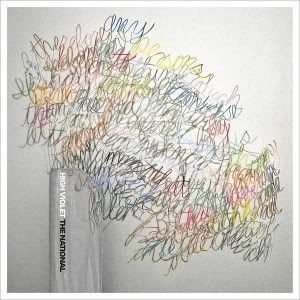
5. The National - "High Violet" (2010)
Sometimes an album itself is not life changing, but rather the soundtrack to change. Maybe you're breaking up with someone, or recovering from an illness, or reading a book that stirs your soul, or experiencing a renewed burst of creative energy. Or, in my case, maybe it's all of the above.
Whatever the event or events may be, if you happen to be listening to something new at the time, it can imprint itself upon the experience and become so intertwined with it as to be completely indistinguishable.
These are the records that get you through the shit you need to get through. They may not open your mind exactly, but they give you what you need when you need it.
The life changers, the "Sergeant Peppers" and the "Blood on the Tracks," are your teachers.
These records are your friends.
Such is the case for The National's "High Violet" for me. I hadn't even heard of these guys until maybe three months ago. The review in Rolling Stone sounded kind of interesting. Inspired by both Joy Division and Bruce Springsteen? Shit, I thought, I gotta check that out.
So it's kind of hard to say whether or not my love for this record is really based on merit. But whatever. This is the best record I've come across in nearly a decade. And I'll be damned if they don't sound like Springsteen crossed with Joy Division.
A five-piece from Cincinatti now based in Brooklyn, The National is fronted by a guy named Matt Berninger who, if I remember correctly, was something like an investment banker or a stock broker who pretty much joined the band on a lark.
My new man crush. I could stare into those eyes for days...
Something about Berninger's voice haunts me in a way that I can't say I've ever really experienced before. It's like Nick Cave's, only dipped in honey and lined with velvet. There's an easy casualness to his singing style -- like a guy mumbling over a cup of coffee just after crawling out of bed -- that somehow makes it so much more affecting.
And, lyrically, he's able to grab onto an image or phrase and toss it off in a way that makes it sink in like little droplets of absinthe. "I was carried to Ohio in a swarm of bees," he sings on "Blood Buzz Ohio." I have no idea what the hell that means, but I'll be damned if it doesn't stir something.
And when he croons "I don't want to get over you" in "Sorrow" .. yeah, I get that. As, strangely, I do when he says "I was afraid I'd eat your brains, because I am evil" on "Conversation 16." That's the singularly weirdest lyric on an album full of singularly weird lyrics. But he sort of throws it out there and moves on, leaving you to shake your head and wonder if you really heard it. And the more you listen it, the more you nod and say "yep. Been there."
Musically, I wouldn't say The National pave any new ground. But the melodies match Berninger's voice perfectly, creating something rich and dark that simmers with a barely restrained heat like a pot just coming to boil.
I've so far avoided diving into The National's back catalogue because I know that there's no way the older albums will hit home like this one did. Only the upcoming years will tell if "High Violet" sticks with me the way the others on this list have. I mean, there was a time, between the ages of 10 and 11, when I truly believed that Queensryche's "Operation: Mindcrime" totally was the story of my life thus far. So who knows how I'll feel in a decade?
But I know that when I look back on this time, Berninger's voice will be what I remember.
Honorable mentions (in no particular order)
Led Zeppelin - "IV" David Bowie - "Ziggy Stardust and the Spiders From Mars" Metallica - "Master of Puppets" Faith No More - "Angel Dust" Massive Attack - "Mezzanine" Creedence Clearwater Revival - "Green River" Johnny Cash - "Live at Folsom Prison" Tool - "Undertow" The Beatles - "White Album" Leonard Cohen - "Greatest Hits"
Seth Brundle (Jeff Goldblum): I think you're making a mistake. I think you really want to talk to me. Ronnie (Geena Davis): Sorry, I have three other interviews to do before this party's over. Seth: Yeah, but they're not working on something that'll change the world as we know it. Ronnie: They say they are. Seth: Yeah, but they're lying. I'm not.
With these words, David Cronenberg let us know exactly what his seminal remake of The Fly (1986) was all about. Seth Brundle was a twitchy New York hipster living in one of those lofts usually reserved for artists and junkie musicians, a bit intense and somewhat asocial but no more so than your average Silverlake barhopper, who thought he could rewrite the laws of physics just because he wanted to. 1980s yuppie hubris taken to the nth degree. Needless to say, it did not end well for him.
Splice, the new movie from Cube (1997) director Vincenzo Natali, really wants to be The Fly. I mean really, really, REALLY. And in Sarah Polley and Adrian Brody, Natali has not one but TWO twitchy hipster scientists with rock star egos. Their Elsa and Clive (classic horror fans, feel free to groan at the hamfisted reference) have turned gene splicing into a Barnum and Bailey circus, and they're chomping at the bit to take the next step and begin working with human DNA.
Where Cronenberg and Goldblum managed to infuse Brundle with an intensity and an animal reservoir of anger that made his subsequent transformation into "Brundlefly" seem as much a spiritual metaphor as a piece of science fiction, we're supposed to know that Elsa and Clive are rebels because they have emo haircuts and a penchant for plaid suits and rose-colored sunglasses (one of the best unintentionally hilarious moments comes when we meet Clive's brother, who looks nothing like him except for the identical My Chemical Romance-lite mop).
These people are ROCKERS (Clive listens to some truly awful heavy metal in his car). They don't got no use for authority, man. So when their corporate overlords forbid them from making a human/animal hybrid, they go ahead and do it anyway...and to an A-Team style montage backed by the most boring electronica soundtrack since Spawn no less.
I'll go ahead and say it now: Splice is an absolutely terrible movie. It takes itself way too seriously, has dialogue that sounds like it was written by a third-grader, has two of the most annoying central performances in recent memory (yes, even more annoying than Get Him To The Greek), and nothing any of the characters does makes any goddamned sense whatsoever.
But, until it takes a gratuitously ugly turn in the last ten minutes or so, it's also pretty frickin' hilarious. When one of the characters actually utters the line "I don't know who you are anymore!" after catching another character having all sorts of dirty nasty animal/human hybrid sex on the floor of a barn, the audience I saw it with was rolling in the aisles.
The only character who has even a hint of substance is the hybrid herself, DREN (Delphine Chanéac). In her own weird way, she's kind of endearing, and there are one or two moments that are actually sort of maybe a little scary. There's a kernal of an interesting idea here, buried behind the piss poor execution. Oh well.
I can't really recommend this movie at all. Just rewatch The Fly instead. But if you feel like getting really wasted and going to laugh at a movie at the dollar theater, I guess you could do a lot worse.
I know this is meant to be a movie review blog, but I've decided to break from my usual format and talk about a book. This is for two reasons:
One: Most of the movies I've seen recently have just kind of sucked. And not sucked in the way that would be fun to write about. Get Him To The Greek? Meh. It's hard to muster the energy. Even films that I enjoyed, like MacGruber, just don't seem to warrant a lot of discussion. I know I sort of scraped the bottom of the barrel with my Date Night review, so I didn't want to put you guys through that again.
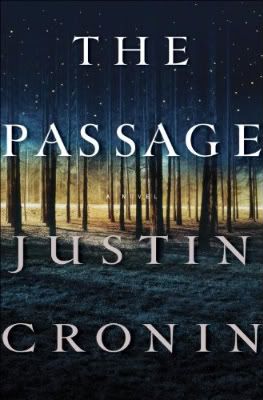
Two: Justin Cronin's new novel The Passage is one of the most incredible books I've ever read.
Anyone who has ever heard me talk for more than five minutes probably knows that Stephen King's The Stand is my favorite novel of all time, and that I treat it nearly as a religion. It looms over its next closest competitor, Thomas M. Disch's equally apocalyptic The M.D. like the Sears Tower over the surrounding Chicago skyline. What makes both of these novels so great -- beyond the artfulness of the writing, the breadth of the characters, and the expansiveness of the authors' respective visions -- is the fact that both King and Disch used the basics of a horror story setup as a springboard to tell a much larger story, as a means to an end rather than an end unto itself.
To reduce either of these books to the label of "horror" is sort of like saying The White Album is a pretty good rock-and-roll record.
As someone who's been reading horror fiction seriously for more than two decades, I've never come across another novel that even approaches either of these masterpieces. So you'll understand how disconcerting it was for me when, about halfway through, I realized that The Passage might not just come close, but could actually sprint right on past like that South African runner whom everyone thinks is really a dude. In the end, it didn't. Not quite. But it sure made a race out of it.
To sum this thing up in a couple paragraphs would be a grave injustice to what Cronin has done here. Like any fantasy story, the plot -- when boiled down to its barest elements -- can't help but sound kind of goofy. So take this synopsis for what it is.
The story starts in the very near future (it's never exactly said when, but I'm guessing around 2018) with Amy Harper Bellafonte, the six-year-old daughter of a homeless prostitute named Jeanette. Once upon a time Jeanette was a waitress at a roadside diner in Iowa who fell for the dubious charms of a traveling salesman. He's described thusly:
"Amy’s father was a man who came in one day to the restaurant where Jeanette had waited tables since she turned sixteen, a diner everyone called the Box, because it looked like one: like a big chrome shoe box sitting off the county road, backed by fields of corn and beans, nothing else around for miles except a self-serve car wash, the kind where you had to put coins into the machine and do all the work yourself. The man, whose name was Bill Reynolds, sold combines and harvesters, big things like that, and he was a sweet talker who told Jeanette as she poured his coffee and then later, again and again, how pretty she was, how he liked her coal-black hair and hazel eyes and slender wrists, said it all in a way that sounded like he meant it, not the way boys in school had, as if the words were just something that needed to get said along the way to her letting them do as they liked. He had a big car, a new Pontiac, with a dashboard that glowed like a spaceship and leather seats creamy as butter. She could have loved that man, she thought, really and truly loved him. But he stayed in town only a few days, and then went on his way. When she told her father what had happened, he said he wanted to go looking for him, make him live up to his responsibilities. But what Jeanette knew and didn’t say was that Bill Reynolds was married, a married man; he had a family in Lincoln, all the way clean over in Nebraska. He’d even showed her the pictures in his wallet of his kids, two little boys in baseball uniforms, Bobby and Billy. So no matter how many times her father asked who the man was that had done this to her, she didn’t say. She didn’t even tell him the man’s name."
This is right on the first page. There's nary a vampire in sight.
What this should tell you is that Cronin's a real writer, possessing an artful grasp of language and a deft touch with the little details (“leather seats like creamy butter”) that make the characters, the environment, and the situation come alive on the page. I love horror fiction, but you just don't find writing like this that often.
Six years later, Jeanette's on the skids (Cronin very sensitively walks us through how a basically good person can end up in such desperate straits after a series of bad but understandable choices). Following a terrible night that ends with Jeanette killing one of her johns in self defense, she throws in the towel on even trying to be a mother, has Amy pack up her things in her battered Powerpuff Girls backpack, and drops her off at a Memphis convent before hitting the road.
Meanwhile, an FBI special agent named Wolgast has been traversing the country, gathering up death row inmates and spiriting them away to a top secret military compound high in the Colorado mountains, where a mad virologist named Jonah Lear and a shady special ops agent named Richards are working on an experiment dubbed Project NOAH. On an expedition into the darkest heart of the Bolivian jungle, Lear discovered a virus that reactivates the dormant thalmus gland, possibly unlocking the key to eternal life. The inmates are to be used as human guinea pigs, and they (known, somewhat religiously, as the Twelve) are transformed into a cadre of super strong vampiric mutants that glow in the dark and can rip rabbits (or humans) apart with their razor sharp teeth.
Lear requests a child -- preferably an orphan -- for the next phase of his experiment. Wolgast retrieves Amy from the convent, but can’t bring herself to take her to the compound. They hit the road. Richards mobilizes his thugs to find them. Long story short, Wolgast is thrown in a cell, Amy is injected with the virus, the Twelve mount a bloody escape, and the world comes crashing to an end.
Ninety-two years later, what may be the last remnants of the uninfected human population have established a small, straggly colony in the mountains east of Los Angeles. Their existence is brutal, and they survive only through vigilance, ingenuity, and the use of century-old military technology that keeps the huge floodlights lit at night and the creatures (called variously virals, smokes, or dracs) at bay.
One day a girl, maybe 16 and strangely impervious to injury or illness, wanders into the colony. She’s the first "Walker" anyone has seen in years. She has a microchip and radio beacon buried in her neck. The information on the microchip suggests that she's at least a century old.
The beacon leads to a repeating signal somewhere in the Colorado mountains: "If you find her, bring her here."
Thus sets the stage for an an epic, cross-country quest every bit as gripping and terrifying as Frodo's journey across Mordor.
Cronin is a pedigreed literary novelist (he has the awards, the job in academia, and the low book sales to prove it), and his dive into genre waters has brought with it considerable hype. Anyone who has followed the press knows the (too cute by half) story of The Passage’s birth: Cronin's 9-year-old daughter expressed her concern to him that his previous books weren't "interesting enough," and requested that he write something about a little girl who saves the world. Indulging her as she tagged along with him on his daily jogs, he played a "Design-a-Novel" game with her, shooting ideas back and forth and building out the story from the ground up. When winter fell and the jogs stopped, he realized he had something.
"Everything a man does in his life he does in some ways to impress a girl," he said in an interview, "and she was the girl I wanted to impress."
Gag. Like I said, too cute by half. But whatever. What matters is that Cronin has brought his considerable literary talents to bare here, building a world that feels fully realized and characters that exist with all the depth, complexity, and contradictions of real people. The Passage reads like a horror novel written by a guy who doesn't really know the genre. This could have lead to something woefully pretentious and even insulting to horror fans, but in Cronin's hands it becomes one of the book's greatest strengths. Characters like Wolgast, Sister Lacey at the convent, and Amy herself could have easily slipped into stock archetypes, but Cronin finds their humanity and draws it forth from the pages like a dowser drawing water from rocky soil.
The first third of the novel concerns the setup that leads to disaster, and Cronin wisely takes his time with it, establishing a world much like ours but just a few years more corrupt. The U.S. continues to be mired in neverending wars. The government has limited interstate travel and has turned the country into a vast surveillance state. Most disturbingly -- considering what's going on right now -- New Orleans has been depopulated and declared a Federal Petrochemical Zone (the only thing still in operation there are the oil wells) and the Gulf of Mexico has become an acrid waste.
Wolgast is a cog in this corrupt machine, diligently doing his job and trying to forget the dead child and angry ex wife he has left behind. But when he is told to bring Amy in, the last sliver of his humanity rebels. The bond that grows between the bitter agent and the little girl in his custody is truly touching without being sappy and leads – many pages later -- to a heartbreaking conclusion.
Cronin also wisely ellipses the time between the escape of the Twelve and the grim future that lies a century hence. He gives us snippets of our world's collapse (the infection spreading like cancer outward from Colorado, the military bombing the cities in an attempt to contain the virus, California and Texas seceding from the country in a last-ditch bid to defend themselves), but he doesn't dwell on it. This is a smart move, because anything he came up with would have been a tired retread of what King did in The Stand 30 years ago.
Instead, he gives us Auntie Jaxon, an old woman who was a little girl at the time of the collapse, and her reminiscences of being shuttled across the country in a train full of children to the hastily constructed compound that becomes the First Colony. There's something endearing about Cronin's notion of a group of largely abandoned children somehow providing the seeds of a new civilization. When Cronin picks up the narrative again, Auntie is an ancient and her great-great nephew, Peter Jaxon -- a young man charged with maintaining the Watch (manning the compound's battlements and looking for any sign of the virals) -- becomes the central character.
Like Project NOAH and Amy's life during the Time Before, Cronin renders existence in the Colony with exquisite detail. The new cast of characters (including Peter's troubled brother Theo and Lish, the militaristic orphan who mans the battlements with Peter and who may or may not be in love with him) come roaring to life. We grow comfortable in the First Colony, start feeling at home there with the many Jaxons, Fischers, Patels and Chous, and when things inevitably come apart at the seams (precipitated by Amy's mysterious arrival and a plague of nightmares that may not just be dreams) we feel the tragedy of the Colony’s undoing as acutely as we do the collapse of our own world. When Peter, Lish and others hit the road with Amy for the arduous journey to Colorado, we can feel their loss of the only home they ever knew.
It's during this journey -- in the final third of the book – where Cronin begins to struggle with the material. His prose becomes ever so slightly more overwrought, and he resorts more and more to "fate" (less charitably "coincidence," and even less so "narrative convenience") to propel the story forward. When our characters find themselves in an apparent haven (actually called "The Haven") of survivors in southern Nevada, Cronin overplays his hand a little, telegraphing too soon the truth of this place that seems too good to be true, thereby sapping the power from the final revelation of what The Haven is all about. It was only in these pages that I began to grow impatient with the story.
But he recovers nicely. As the characters move into Colorado, he throws some unexpected curveballs and delivers a powerful climax before giving us an open-ended conclusion that manages to be heartfelt without sinking too deeply into the saccharine.
He then delivers a sucker punch on the last page that will literally take your breath away. Thank God this is supposed to be the first in a series, because I'm almost literally dying to know what happens next.
Cronin has been widely praised (most notably by King himself) for putting the scare back into the vampire story. But this isn't really his goal. Parts of the book are inarguably very frightening, and Cronin displays a Hitchcockian knack for building suspense. But the overarching tone of the book is one of deep, aching sadness (I'd suggest listening to, as I did, The National'sHigh Violet while you read it. If there has ever been a better marriage between album and novel, I don't know what it is). The virals themselves barely resemble vampires as we know them, and Cronin impressively balances the terror at what they are and what they can do with the tragedy of who they were.
As someone who still daydreams about someday writing the perfect horror novel, it would be easy to resent Cronin for this book. Here's this literary douchebag who wandered into MY genre after goofing around with his daughter and managed to write perhaps the best horror novel in two decades. And he makes it look pretty damn easy.
Asshole.
But in the end I'm grateful for this book. If you're a horror fan -- or just a fan of good writing that can sweep you away -- you will be too.
I can appreciate a well-done screwball comedy as much as the next guy, but generally speaking Date Night is not the type of movie I'd go out of my way to see. But after last night's traumatic film-watching experience (read my review of Dear Zachary if you don't know what I'm talking about), a goofy Tina Fey/Steve Carell romcom seemed like exactly what I needed.
Date Night strolls down the well-trodden path worn by such classics as North By Northwest and Adventures in Babysitting: a couple "normal" folks (here a New Jersey couple played by Fey and Carell) stumble into an overplotted mess of intrigue and flying bullets. The suspense (such as there is) and the comedy comes from their utter bewilderment at finding themselves in such a direct-to-video predicament. They're in over their heads, and blah blah blah blah blah...
The overplotted mess itself doesn't really matter. What matters is whether or not our leads are A) funny, B) likeable, and C) at least quasi-relatable. While certainly no classic, Date Night mostly succeeds on all three counts.
Fey and Carell are Claire and Phil Foster, a bored -- and boring -- married couple living in the burbs outside of New York. They're the type of people who forgo sex if it means having to remove one's mouth-guard. In a vain attempt to keep the coals burning in their relationship, they schedule weekly date nights at a local chain restaurant...but even there they have a hard time talking about anything other than the birthday presents they have to get for their kids' friends. In other words, they're hopeless.
What could be (and should be, based on the rote script and uninspired direction) an insufferably smug and patronizing look at the deadened zombies supposedly shambling through the suburbs is rescued by Fey and Carell, who manage to keep their performances a hair's breadth above complete caricature. Sure, we get glimpses of Liz Lemon and Michael Scott here and there, but these are smart performers, and they wisely opt to err on the side of keeping Phil and Claire grounded (at least until the shit hits the fan). When they crack each other up imagining the conversations being had by their fellow restaurant goers, we see the hint of the shared sense of humor that brought these two together in the first place. We get an impression of two people who are bored by their circumstances, but still basically love each other and -- perhaps more importantly -- like each others' company.
After learning of the impending divorce of two of their friends, however, the freak out a little bit and decide to put a little more effort into their next date night. Spontaneously driving into Manhattan to try to get into a chic seafood restaurant that demands customers reserve their tables a month in advance, they end up impersonating another couple -- the Tripplehorns -- on the reservation list. The sudden thrill of mostly benign "oooh, we might get caught" danger provides a bit of spark, and we see a glimpse of the probably mischievous college students they once were before life (and kids) wore them down.
Then a pair of hitmen show up, thinking they are the Tripplehorns, and hijinks predictably ensue.
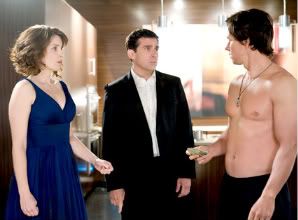
Like I said, what happens next only matters inasmuch as it gives Fey and Carell more opportunities to comedically bounce off of each other. There's something about a stolen flash drive, a corrupt DA (played by an always great William Fichtner), a brooding mobster (played by a phoning-it-in Ray Liotta), a pair of corrupt cops (Jimmi Simpson and Common), two decent cops (Taraji P. Henson and some other guy), a lowlife couple (James Franco and Mila Kunis) whose relationship amusingly mirrors that of Claire and Phil, one of the most stupid/funny car chases I've seen in awhile, and -- funniest of all -- a perpetually shirtless Marky Mark (Mark Wahlburg, to those younger than me) as a special ops guy whose pecs make Claire get all tingly and Phil "want to kill myself". There's a ridiculous climax that involves a hilarious Fey/Carell pole-dance in one of those seedy strip clubs that I suspect only exist in the heads of Hollywood production designers.
But all that extra business is just that: business. It's window dressing. In the end it all comes down to Fey and Carell. And -- while neither of them reach the heights they've proven themselves capable of on The Office and 30 Rock -- they deliver.
Date Night is a two-star movie elevated by at least half-a-star -- maybe more -- by its lead performances. I wouldn't say to rush out and see this right away. But if you happen to be stuck in a soul-deadening suburban marriage and you're looking for something to kill a couple hours, you could do way worse.
You may or may not have noticed, but I haven't posted any reviews of anything for over three months.
This isn't because I've forgotten, or because I decided to give it all up and go farm Alpacas up in Colorado or something. The reason is simple: I just really haven't seen a movie worth writing about. I started an Avatar review, then realized I had nothing to say and gave up. I considered an Edge of Darkness and Book of Eli review, then decided not to bother. I even thought of writing something short and sweet about The Crazies, and then was immediately distracted by something shiny and forgot all about it.
But here it is, 4:40 in the morning. My stomach hurts. My eyes are red and swollen. My throat is filled with a lump the size of a golf ball. I've been lying here in the darkness of my bedroom for the last hour and a half trying to make myself think of something -- anything -- other than the film I just saw. And I can't do it. This thing has burrowed into my gray matter like a rat, and it's just sitting there chewing away at the wiring.
Some movies get under your skin. Others bite. This one puts a fishhook into your testicles and gives a good hard yank.
This movie will crush you. Oh my God, will it crush you...
Back in 2001 Dr. Andrew Bagby was 28 years old. He had just abandoned a miserable surgical internship in Syracuse in favor of a general practice internship in Pennsylvania. Life was finally looking up for the guy. He had broken up with his fiancé a few years previous -- had gotten his heart thoroughly broken, in fact -- and wasn't feeling too good about himself, so while attending medical school in Newfoundland he had started an ill-advised relationship with Dr. Shirley Turner, a two-time divorcee and absentee mother thirteen years his senior.
But now that he was in Pennsylvania, he was ready to move on with his life. He and his fiancé had managed to maintain a friendship, and he was slipping into his new internship like a glove. The only thing left to do was somehow break it off with Turner, who everyone around him thought was crazy but who he still had some affection for. He tried to let her down easy -- Andrew Bagby was a good guy, and the last thing he wanted to do was hurt her. So he broke it off as gently as he could and put her on a plane back to Iowa, where she was living at the time. When she landed she immediately turned around and drove 1,600 miles back to Pennsylvania and demanded he talk to her. Being the good guy that he was, he agreed. They met in a nearby park. God knows what was said between them. She shot him five times and then drove back to Iowa. Then, coldly and calculatedly, she left a message on his answering machine telling him that she just wanted to say hi and that she loved him.
It just so happens that Bagby's best friend from the age of seven was an aspiring filmmaker named Kurt Kuenne. Not knowing exactly what to do with his grief, Kuenne picked up a camera and started interviewing everyone he could -- Bagby's parents, his extended family in both Missouri and the UK, his friends, his acquaintances, his colleagues. He wanted to learn everything he could about the friend he had lost. In a way the project was a form of denial. As he says in the film, he was on a mission to bring Andrew Bagby back to life.
Meanwhile, Turner managed to flee back to Newfoundland before the American justice system could get its hands on her, and she very quickly revealed that she was pregnant with Bagby's baby. David and Kate Bagby -- Andrew Bagby's grieving parents (he was their only child) -- immediately decided to sue for custody, sold everything they owned and moved to Canada. The baby was born, and Turner named him Zachary. Kuenne redirected the focus of his film as a sort of open letter to Zachary in hopes that it would help him get to know the father that was stolen from him.
The Canadian justice system decided that it was okay to let a suspected murderer out on bail and allow her to raise her child while it drug its feet on extradition. David and Kate gritted their teeth and negotiated with Turner for rights to visit their grandson while the custody battle moved with excruciating slowness through the courts. Turner used it as a means to further torment the parents of the man who committed the mortal sin of breaking up with her, extorting them for diapers and baby food money and essentially strong-arming them into going on playdates with her and her son so they could spend time with him. If you ever wanted to get a hint what it might be like to talk daily on the phone about birthday parties and babysitters with the woman who murdered your only son, this movie gives you a pretty good idea.
Kuenne trudged along with his personal project, obsessively interviewing seemingly anyone and everyone who knew Andrew. He combed through countless hours of home videos, countless piles of photographs. What emerges is a portrait of a man who any one of us would have been proud to call a friend. In death, as we know, just about everyone becomes a saint in the eyes of those who remember him. Certainly there must be a degree of that happening here. But at the very least, it becomes clear that Andrew Bagby was nothing short of an honest-to-God, bonafide Good Dude. We all have a friend like him, the guy (or girl) we grew up with who just thinking about makes us smile, even ten or twenty years later. The person you can go a year without speaking to and then pick up the phone and talk to like it was yesterday. No less than six men say they were planning to have Andrew be the best man at their wedding. That tells you something.
As we get to know Andrew, we also get to know David and Kate. If Andrew Bagby comes off as a saint, they are nothing short of heroic. The Job-like level of their suffering is nearly impossible to comprehend. They continue to play nice with their son's murderer, stoically putting their dwindling trust in the Canadian justice system and always dreaming of the day that Turner will finally be locked up for good and Zachary will be theirs. Kuenne walks us through the the tortured Canadian courts, where one bad decision leads to an absurdist, Kafka-esque comedy of errors that is about as funny as a nail gun shot to the forehead. When Turner is released on bail a second time because a sympathetic judge doesn't believe that her crime (First Degree Murder, we silly Yanks like to call it) indicates any sort of threat to society, you'll want to put your fist through a wall. When little Zachary is once again returned to Turner's poisonous bosom, you'll want to tear your hair out and scream.
And when the inevitable happens, you will.
The letter-to-Zachary construct is a manipulative filmmaker's trick. I won't argue with that. But it works. Kuenne uses it to bypass the tropes of your average true-crime documentary and to re-center the film's focus where it belongs: on the life that was lost and on the human wreckage that that loss has left in its wake. You come to love Andrew -- or at the very least understand why he was so loved by everyone who knew him -- and you come to look upon David Bagby and Kate with nearly Divine awe.
Kuenne manages to create a convincing polemic in favor of victim's rights, as well as a vision of human evil that will curdle like rotten milk in your stomach. But mostly, he has penned a crushingly heartfelt love letter to a dead friend, and to the shattered family his friend has left behind.
Watch this movie. Watch it and then pick up the phone and call your buddy from high school. When you're done catching up, call your parents and tell them you love them.
Watch this movie. But don't watch it before you go to bed, or you'll find yourself awake -- hoarse, sniffly, and red-eyed -- at five in the morning just like me.
Since taste is so subjective -- and because I'm fully aware of the fact that there are plenty of movies out there from the last decade that I haven't seen -- I'm loathe to call this a "Best Of" list. Rather, let's just say that these are my personal favorites, the ones that compelled me to go back for a repeat viewing.
So here goes.
1. Let the Right One In and The Signal (both 2008)
Directed by Tomas Alfredson (Right One) and David Bruckner, Dan Bush, and Jacob Gentry (Signal)
2008 reignited my passion for horror movies after a slow, nearly decade-long falling out with the genre, and it was these two films -- wildly different but each brilliant in its own way -- that did it.
I saw The Signal first, and I walked away convinced I wouldn't see a better horror film for at least another decade. Conceived by a collective of independent Atlanta filmmakers working with prosumer equipment, the movie is told in three elegantly interlocking parts, each written and directed by a different person but all forming a cohesive -- if utterly demented -- whole. The story is deceptively simple: a strange electronic signal delivered through TVS, radios and cell phones turns all of the denizens of a fictional American city into homicidal maniacs. I don't want to say anything more about it for fear of spoiling the experience. Just trust me when I say this is the most original and thought-provoking American horror film in years. And it was all done for a budget of about $200,000.
So when I saw Let the Right One In some months later, I was stunned to discover that it was even better. Austere, chilly and deliberate where Signal is heated and frenetic, Right One manages to do what Twilight, True Blood, Thirst, Underworld, and all the other "vampire chic" movies and TV shows in recent years have so far failed to do ... make vampires scary again. The swimming pool scene toward the end is worth the rental price alone.
2. The Business of Fancydancing (2002) and Atanarjuat: The Fast Runner (2001)
Directed by Sherman Alexie (Fancydancing) and Zacharias Kunuk (Atanarjuat)
NOT SAFE FOR WORK!!!
I don't really like the term "indigenous film" because it smacks to me of white liberal condescension, but I think it's worth noting that two of the best independent films from the early part of the decade came from Native American (or Canadian) filmmakers using the then new medium of digital video.
Fancydancing was written and directed by novelist/poet/screenwriter Sherman Alexie, and it follows Seymour Polotkin (Evan Adams), a gay Native American poet living in Seattle, as he returns home to the reservation he grew up on to attend a childhood friend's funeral. The film comes off as one part documentary, one part traditional narrative, and one part visual poem. It will creep under your skin without you even knowing it, and the quiet but crushing ending can reduce even the most macho dude to tears (trust me, I've seen it happen).
Atanarjuat is a very different film. Written and acted entirely in Inuktitut, it is the cinematic realization of a centuries old Inuit myth about the title character. Director Zacharias Kunuk provides almost no narrative context for non-Inuit audiences, choosing instead to toss us head-first into the story, and he uses the DV format to lend the film a sense of both immediacy and reality. The result is a movie that feels in some ways like a Maysles brothers documentary. Yet Kunuk still manages to create a stunning visual landscape, wringing images out of his video camera that a studio cinematographer would envy. It's a long movie, and slow going, but well worth it.
3. Michael Clayton (2007)
Written and directed by Tony Gilroy
The directorial debut from screenwriter Tony Gilroy (Dolores Claiborne, The Devil's Advocate, the Bourne trilogy, among others), Michael Clayton was sort of lost in the shuffle during a powerhouse year that offered up such lauded (and I would argue overrated) films as No Country For Old Men and There Will Be Blood. Critics had nice things to say about it, but audiences didn't really notice and all the available Oscar buzz got sucked up by the Country/Blood showdown.
Granted, a legal thriller about a cynical lawyer (George Clooney) confronting the depths of corporate greed is familiar terrain oft-traversed by the likes of John Grisham and Scott Turrow. But that's selling this movie short. Michael Clayton is oh-so-much better than its legal-thriller genre origins would suggest. Click on that clip I posted above, close your eyes and listen to Tom Wilkinson's opening monologue, and try to tell me that this isn't the work of an A-list screenwriter operating at the absolute top of his game. Michael Clayton is the type of straightforward movie that Hollywood does best, when it can get its shit together.
4. Shaun of the Dead (2004)
Directed by Edgar Wright
This is the movie that singlehandedly destroyed my beloved zombie subgenre and forever dashed my aspirations of making a truly scary, super-serious zombie movie like the ones I grew up on. After receiving the Edgar Wright/Simon Pegg treatment, I just don't think zombies can ever be taken seriously again.
But that's okay, because this movie is so friggin' awesome I can't be mad at it. Smart, silly, and -- yes -- even scary at times, Shaun of the Dead injected a much-needed shot of comedic tough love into an admittedly (begrudgingly, on my part) tired formula. The film transcended parody and proudly entered the pantheon of great horror comedies, unceremoniously batting Return of the Living Dead aside like a rag doll and knocking An American Werewolf in London off its long-occupied throne. And we all must now bow before it.
5. Memento (2000)
Written and directed by Christopher Nolan
The backwards-unfolding structure of this movie could have been a hopelessly irritating gimmick, but writer/director Christopher Nolan used it to craft a brilliant exploration of the very nature of memory and identity. And he managed to make a pretty awesome neo-noir thriller as well. Memento is now considered an undisputed classic, and it's as stunning to me these days as it was when I first saw it almost ten years ago in the theater. If you haven't seen it in awhile, go back and give it another watch. I promise you'll see things you missed the first time around.
Plus, it has Joey Pants. You can never have enough Joey Pants in your life.
6. Little Children (2006) and House of Sand and Fog (2003)
Directed by Todd Field (Children) and Vadim Perelman (House)
I grouped these two films together because of the presence of the generally amazing Jennifer Connelly, but it says something when you stop and realize that hers isn't the strongest performance in either film.
Little Children, directed by Todd Field (In The Bedroom) and adapted from a novel by Tom Perrotta (Election), was criminally unappreciated upon its release. A seemingly familiar tale of suburban infidelity, it's both funny and tragic, deleriously sexy, and is wonderfully acted from start to finish. It reintroduced us all to Jackie Earle Haley, whose turn as pedophile Ronnie James McGorvey is so alternately creepy and heartbreaking that it will leave you breathless, near tears and desperately wanting a shower. And Kate Winslet's pretty good, too.
House of Sand and Fog is probably the better film (although I'm partial to Children). Connelly and Ben Kingsley soar as two broken people battling each other and their personal demons in a tug-of-war over a repossessed house. There's nothing funny about this one, and the conclusion left me shaking in my seat. This is a movie that cuts to the bone.
7. Zodiac (2007)
Directed by David Fincher
David Fincher fans expecting another violent bruiser like Se7en or Fight Club were largely disappointed by the slow-paced, talky, and necessarily open-ended Zodiac. What they failed to realize was that this is a mature film for grownups, and it's less a serial killer movie than an old-fashioned, 1970s-style newspaper movie. Granted, I was predisposed to like it because of my already established fascination with the Zodiac Killer (which came from reading the book by Robert Graysmith, who's portrayed in the movie by Jake Gyllenhaal), but I still fly in the face of movie-geek wisdom by maintaining that it's Fincher's best. And, besides, it comes with my favorite movie soundtrack since Natural Born Killers.
8. Brokeback Mountain (2005)
Directed by Ang Lee
I almost didn't post this trailer, since it -- along with the theme song and the "I wish I knew how to quit you" line -- have been reduced to an unfortunate parodic shorthand in the years since. But watching it just now reminded me how much I love this movie, which for my money is one of the most starkly effective works of cinema I've seen. Masterfully directed by Ang Lee (robbed at the Oscars by that hack Paul Haggis) and adapted from an Annie Proulx short story by veteran writer Larry McMurtry (along with writing partner Diana Ossana and frequent Lee collaborator James Schamus), this is the movie that reminded all of us that Heath Ledger could act. He may now be forever remembered as the Joker, but this is the performance that stole my heart (and I'll thank you to stop your snickering).
9. Grizzly Man (2005) and The Bad Lieutenant: Port of Call New Orleans (2009)
Both directed by Werner Herzog
Werner Herzog has proven to be one of the most fascinating documenters of human folly and psychosis that cinema has to offer (this probably comes from all that time he spent hanging out with Klaus Kinski back in the 70s). In his documentary Grizzly Man, he focuses on a real-life crazy person: Timothy Treadwell, a failed actor who got it into his head to go to Alaska and hang out with a bunch of hungry grizzly bears all summer without any means to defend himself. He did this for years, proclaiming over and over again that he would die for his beloved bears. And then one of his beloved bears decided to eat him, along with (sadly) his girlfriend, who Treadwell drug along with him on his delusional adventure almost against her will. Herzog mixes Treadwell's footage with interviews and his own acerbic commentary, and he presents a vision of this story that is both funny and tragic, occasionally sympathetic and at times downright cruel. In true Herzogian fashion, we can't help but think the celebrated German filmmaker is reveling a bit in the tawdry details of the story. And who can blame him?
If you doubt that, then look no further than his latest...er...opus, The Bad Lieutenant: Port of Call New Orleans. Ostensibly a remake of Abel Ferrera's...um...classic indie from the early 90s, Bad Lieutenant is nothing BUT tawdry details. I'm not sure I can really defend this choice as one of the best films of the decade, but I will say that I had more fun with it than almost anything else I've seen in the last ten years and it's so gloriously, stupendously demented that I couldn't not mention it here. Nicolas Cage is far from my favorite actor, but what he does in this movie is simply mind-blowing. It really has to be seen to be believed.
10. A History of Violence (2005)
Directed by David Cronenberg
I really tried not to overfill this list with dude-oriented movies about sex and violence, but what can I say? I like what I like. That said, as movies about sex and violence go, David Cronenberg's adaptation of the graphic novel by John Wagner and Vince Locke is curiously flat in the depiction of both. That's because Cronenberg has spent a career working his way through weirdo, existential horror movies on an endless quest to explore the frayed edges reality and examine the ways humans find to create their own reality. Violence isn't really about violence at all, but rather about how a man can -- through sheer force of will -- become someone else entirely. Cronenberg and Violence star Viggo Mortensen explored similar thematic territory with their somewhat less effective followup, Eastern Promises. That was a good enough movie, but I think Cronenberg really said all he needed to say on the subject with this one.
11. Infernal Affairs (2002) and The Departed (2006)
Directed by Andrew Lau and Alan Mak (Affairs) and Martin Scorsese (Departed)
I can't get away from this list without mentioning Andrew Lau and Alan Mak's Hong Kong crime thriller Infernal Affairs and its American, Scorsese-helmed remake The Departed.
It's unfashionable to say one prefers The Departed to Infernal Affairs, and it's true that Departed is sprawling and messy next to the cold elegance of Lau and Mak's original. It's also true that Departed is seriously marred by a "what-the-fuck?" performance by an eternally phoning-it-in Jack Nicholson. But, after living in Boston for a couple years and having subsequently become obsessed with the real-life tale of Boston gangster Whitey Bulger, around which Scorsese and screenwriter William Monahan refashioned their story, I have to say I prefer The Departed. The film captures the language, feel, and texture of Boston in a way that no other film I've seen has before it (take THAT, Mystic River), and -- Nicholson aside -- the performances are nearly pitch perfect across the board. Even Vera Farmiga shines in a role that by rights should never have been written.
Is it crazy to think of The Departed as the final part of a trilogy, preceeded by Goodfellas (1990) and Casino (1995)? I think not.
12. In Bruges (2008)
Written and directed by Martin McDonagh
NOT SAFE FOR WORK!!!
I'm not going to say a whole lot about this one. If you watched the clip above you get the idea. In truth, Martin McDonagh is a brilliant playwrite -- nasty, profane, and funny, sure, but with a surprising capacity for spiritual depth and a truly genius touch with character -- and In Bruges is a startlingly solid first step into feature filmmaking (his Oscar-winning short, Six Shooter, is even better). Watch out for him in the future.
13. This Is England (2006)
Written and directed by Shane Meadows
I've mentioned this movie and talked about Meadows before, so I'll try not to dwell. Meadows is one of the most exciting filmmakers working in England today, and his semi-autobiographical film about the rise of the at-first benign skinhead movement and its corruption by the racist National Front is as eye-opening as it is entertaining. Thomas Turgoose is a firecracker as the young lead, Shaun, and Stephen Graham is absolutely chilling as Combo, Shaun's vicious mentor in the ways of English nationalism. This Is England is like a rich, raw wound needing to be bled.
*****
There are a lot more movies I'd like to talk about, but this post is already ridiculously long so I'll just give a quick shoutout, in no particular order, to: The Last King of Scotland American Psycho Dancer in the Dark Ginger Snaps High Fidelity Requiem for a Dream Traffic Ghost World Waking Life Adaptation City of God Spider Amores Perros Battle Royale 21 Grams Cabin Fever Dogville Elephant Kill Bill Vol. 1 and 2 Love Actually The Station Agent Willard Swimming Pool Wonderland Session 9 Anchorman: The Legend of Ron Burgundy The Royal Tenenbaums Sideways Monster The 40-Year-Old Virgin Brick Caché The Constant Gardener Dog Soldiers Inside Deep Throat Jarhead Kiss Kiss Bang Bang Land of the Dead Match Point The Proposition Six Shooter War of the Worlds Wolf Creek The Assassination of Richard Nixon Before Sunset Collateral Dawn of the Dead Downfall Eternal Sunshine of the Spotless Mind Hotel Rwanda The Lost United 93 Clerks II The Prestige Borat: Cultural Learnings of America for Make Benefit Glorious Nation of Kazakhstan Volver Stranger Than Fiction Blood Diamond Children of Men Pan's Labyrinth Dead Man's Shoes An Inconvenient Truth The Science of Sleep The Lookout Death Proof Sunshine Death Sentence Eastern Promises No Country For Old Men Beowulf The Mist Juno There Will Be Blood Cloverfield The Ruins WALL-E The Dark Knight Burn After Reading Milk The Wrestler Donkey Punch Coraline Gomorrah State of Play District 9 Inglourious Basterds Zombieland Brothers Avatar (sorry, Gene) No End In Sight Waltz With Bashir Narc Hard Candy